Free PDF Food Additives: A Shopper's Guide to What's Safe & What's Not (2004 Revised Edition), by Christine Hoza Farlow
Why need to be this e-book Food Additives: A Shopper's Guide To What's Safe & What's Not (2004 Revised Edition), By Christine Hoza Farlow to check out? You will never ever obtain the expertise and also experience without getting by on your own there or attempting by on your own to do it. Thus, reviewing this publication Food Additives: A Shopper's Guide To What's Safe & What's Not (2004 Revised Edition), By Christine Hoza Farlow is required. You can be great and also appropriate enough to get just how essential is reviewing this Food Additives: A Shopper's Guide To What's Safe & What's Not (2004 Revised Edition), By Christine Hoza Farlow Also you always review by responsibility, you could sustain yourself to have reading publication behavior. It will certainly be so beneficial as well as enjoyable after that.
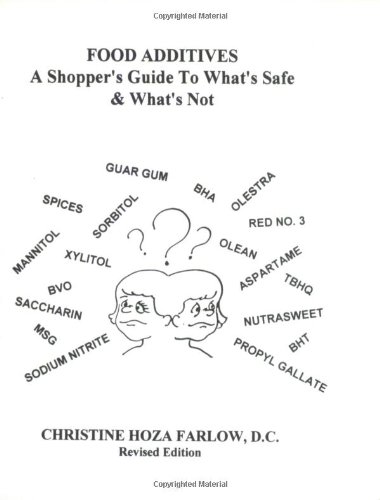
Food Additives: A Shopper's Guide to What's Safe & What's Not (2004 Revised Edition), by Christine Hoza Farlow

Free PDF Food Additives: A Shopper's Guide to What's Safe & What's Not (2004 Revised Edition), by Christine Hoza Farlow
Food Additives: A Shopper's Guide To What's Safe & What's Not (2004 Revised Edition), By Christine Hoza Farlow. Welcome to the best website that available hundreds sort of book collections. Below, we will certainly provide all books Food Additives: A Shopper's Guide To What's Safe & What's Not (2004 Revised Edition), By Christine Hoza Farlow that you need. The books from renowned authors and also authors are given. So, you could take pleasure in now to obtain one by one kind of book Food Additives: A Shopper's Guide To What's Safe & What's Not (2004 Revised Edition), By Christine Hoza Farlow that you will certainly search. Well, related to guide that you really want, is this Food Additives: A Shopper's Guide To What's Safe & What's Not (2004 Revised Edition), By Christine Hoza Farlow your choice?
If you get the printed book Food Additives: A Shopper's Guide To What's Safe & What's Not (2004 Revised Edition), By Christine Hoza Farlow in on-line book establishment, you may also find the very same trouble. So, you must move shop to establishment Food Additives: A Shopper's Guide To What's Safe & What's Not (2004 Revised Edition), By Christine Hoza Farlow and search for the offered there. However, it will certainly not occur here. Guide Food Additives: A Shopper's Guide To What's Safe & What's Not (2004 Revised Edition), By Christine Hoza Farlow that we will offer here is the soft documents concept. This is what make you could quickly locate as well as get this Food Additives: A Shopper's Guide To What's Safe & What's Not (2004 Revised Edition), By Christine Hoza Farlow by reading this website. Our company offer you Food Additives: A Shopper's Guide To What's Safe & What's Not (2004 Revised Edition), By Christine Hoza Farlow the most effective item, constantly as well as consistently.
Never ever question with our deal, since we will certainly constantly give what you need. As such as this upgraded book Food Additives: A Shopper's Guide To What's Safe & What's Not (2004 Revised Edition), By Christine Hoza Farlow, you may not locate in the various other place. Yet right here, it's quite easy. Simply click and download, you could own the Food Additives: A Shopper's Guide To What's Safe & What's Not (2004 Revised Edition), By Christine Hoza Farlow When convenience will alleviate your life, why should take the challenging one? You can buy the soft documents of the book Food Additives: A Shopper's Guide To What's Safe & What's Not (2004 Revised Edition), By Christine Hoza Farlow right here and also be member of us. Besides this book Food Additives: A Shopper's Guide To What's Safe & What's Not (2004 Revised Edition), By Christine Hoza Farlow, you can also locate hundreds listings of the books from many sources, collections, publishers, and also authors in all over the world.
By clicking the web link that our company offer, you can take the book Food Additives: A Shopper's Guide To What's Safe & What's Not (2004 Revised Edition), By Christine Hoza Farlow perfectly. Connect to net, download, and also save to your tool. Exactly what else to ask? Reviewing can be so simple when you have the soft data of this Food Additives: A Shopper's Guide To What's Safe & What's Not (2004 Revised Edition), By Christine Hoza Farlow in your gadget. You can likewise copy the file Food Additives: A Shopper's Guide To What's Safe & What's Not (2004 Revised Edition), By Christine Hoza Farlow to your workplace computer system or at home as well as in your laptop. Simply discuss this great news to others. Recommend them to visit this resource and also get their searched for books Food Additives: A Shopper's Guide To What's Safe & What's Not (2004 Revised Edition), By Christine Hoza Farlow.
FOOD ADDITIVES: A Shopper's Guide To What's Safe & What's Not reveals what food manufacturers don't want you to know about their products. It shows you how to find the truth behind deceptive food packaging. You will learn how to confidently read labels so that you will know how healthy a food really is and if it contains dangerous ingredients. New in the 2004 edition, you will learn how to identify genetically modified produce in the grocery store.
This book classifies over 800 commonly used food additives according to safety, whether they may cause allergic reactions, and if they are Generally Recognized As Safe (GRAS) by the FDA. In just seconds, the average person can determine if the food they're buying contains dangerous substances. The book is clear, concise and easy to use.
- Sales Rank: #4431238 in Books
- Published on: 2004-04
- Ingredients: Example Ingredients
- Original language: English
- Number of items: 1
- Dimensions: 5.25" h x 4.50" w x .25" l,
- Binding: Paperback
- 80 pages
Review
"I'm a graduate student in Nutrition and have found your booklet to be most helpful compared to others that I've used." -- Brenda L. Johnson
"A great pocket resource in understanding lableleze." -- Earl Mindell, R.Ph., Author of The Vitamin Bible
"I loved your little book. Its contents are excellent.... I will use it myself as a reference." -- Bruce West, D.C., Author of HEALTH ALERT newsletter
"I recommend everyone carry this with them in their purse or glove, compartment for handy reference." -- Lendon H. Smith, M.D., Author of Feed Your Kids Right
"I recommend everyone carry this with them in their purse or glove compartment for handy reference." -- Lendon H. Smith, M.D., Author of Feed Your Kids Right
I'm a graduate student in Nutrition and have found your booklet most helpful compared to others that aI've used." -- Brenda L. Johnson
From the Author
If you buy packaged foods, you need to read labels more today than ever before! Because of increasing consumer awareness about eating more healthfully, manufacturers are designing food packages to make it look like the food inside the package is healthy. But if you read and interpret the ingredients on the label, there's a very good chance that you'll find that is not the case. Many of the ingredients added to food are harmful. And it's even legal for food manufacturers to add cancer-causing substances to the food they produce.
Almost all packaged foods, even so called "health foods," have additives in them, and many are harmful or inadequately tested. For example: Aspartame, also known as NutraSweet and Equal, breaks down into substances called excititoxins which excite nerve cells in the brain to death. Ninety-two different symptoms from aspartame were reported to the FDA, including headaches, dizziness, seizures, speech and visual impairment, blindness and even death. It can cause symptoms which mimic the symptoms of numerous diseases, including Alzheimer's, epilepsy, chronic fatigue syndrome, depression, multiple sclerosis, Parkinson's, Gulf War Syndrome and mental illness. Even people who don't experience symptoms can suffer long term damage. Carrageenan, a seaweed derivative often found in "health food" products, is a suspected carcinogen; it may contain hidden MSG. BHT, legal in the U.S. but banned in England, is associated with liver and kidney damage, behavioral problems, infertility, weakened immune system, birth defects and cancer. Brominated vegetable oil (BVO), an ingredient in a popular sports drink, and pediatric electrolyte replacement beverage is considered unsafe by the FDA, but can still lawfully be used until the FDA takes further action. It is linked to major organ system damage, birth defects and growth problems. Hydrogenated and partially hydrogenated vegetable oils, found in most packaged products, are associated with heart disease, breast and colon cancer, atherosclerosis and elevated cholesterol. MSG is an excitotoxin which can excite nerve cells in the brain to death. Even people who don't experience reactions from consuming MSG can suffer long term damage. MSG can be hidden in many different ingredients, including broth, hydrolyzed protein, barley malt and whey protein. Nitrates and nitrites, powerful cancer-causing agents, are considered dangerous by the FDA, but are not banned because they prevent botulism. These are only a few examples of the many harmful substances legally added to our food.
So, be sure that what you're eating is healthy. With this book, you will discover how quick and easy it is to tell if the food you're buying contains dangerous ingredients. It contains all the information about food additives contained in the previous editions and more, updated information on the safety of the additives, more information on MSG, hidden MSG and free glutamates and new additives, like Olestra, Salatrim, Sucralose and Splenda. It even contains information on the additives, Alitame and Neotame, that are awaiting approval as of this writing.
You can't depend on the FDA or the food manufacturers to make sure the food you buy in the grocery store is safe. It's up to you! Use this book as your constant grocery shopping companion and you'll never again wonder about the safety of the ingredients listed on the package. You'll know.
From the Back Cover
This Book Is A Must For Anyone Who Eats
You will discover how quick and easy it is to tell if the food you're buying contains dangerous ingredients.
I recommend everyone carry this with them in their purse or glove compartment for handy reference. - Lendon H. Smith, M.D., Feed Your Kids Right
A great pocket resource in understanding labeleze. - Earl Mindell, R.Ph., Ph.D., Unsafe At Any Meal
Dr. Christine Farlow has been counseling patients and teaching classes in nutrition since 1984. She has helped thousands of people improve their health through nutrition.
Use this book as your constant grocery shopping companion. You'll never again wonder about the safety of the ingredients listed on the package. You'll know.
Most helpful customer reviews
6 of 6 people found the following review helpful.
Handy little starting point, but...
By Leslie Estes
This little book packs a little punch - and more importantly, doesn't pull too many regarding Genetically Modified Foods. But I agree with the one and three star reviewers that we need something a bit more up to date; and I would add, something more in-depth. For instance, much has changed since 2007 and there are now plenty of conclusive studies showing the toxins and dangers of eating GM foods, which isn't mentioned in this book. Hopefully, if there is another edition the author will include more specific health dangers directly associated with GMO's. GM corn for instance has been found to have male sterility properties (and fertility rates have indeed suffered dramatically since the introduction of GM foods). The author states it is estimated that about 70% all US commercially grown corn is GM. That was in 2007. That number has grown to nearly 100% in 2012. The author's short list of GM foods also needs to be expanded to include, among others, more information on farmed raised salmon, GE hormone rBGH/rBST injected into cows that are also fed GM grains and hay, and the most recent genetic modification in the midst of winning full Congressional approval is genetically modified salmon that reach monstrous sizes in extremely short growing periods. This is thought to be the precursor to genetically modified farm animals - all intended to increase production and profit at great cost to the health of the consumer.
A daunting task by any measure, the author has classified over 1000 commonly used food additives according to safety, whether they may cause allergic reactions, and if they are Generally Recognized As Safe (GRAS) by the FDA. But contrary to popular belief, the FDA is not our friend. To use the FDA guidelines in determining what is safe and what is toxic is as risky as nourishing yourself according to the RDA (Recommended Daily Allowance). An unfortunate follower of such guidelines will more often than not face unnecessary suffering and untimely death through disease and malnourishment. Another shortcoming of this book is it only shows carcinogenic (cancer) dangers associated with substances based solely on IARC (the International Agency for Research on Cancer). This is a start, but there are many other well-founded and accepted studies showing great danger and toxicity in MANY of the additives for which the IARC has given a free pass. No additional studies or recommendations are included in this book.
I purchased 5 of these books to give as gifts to my grown sons. It was probably a waste of money as this really isn't much of a shopping guide as some of the reviews have stated. It's a good start - and the list is impressively extensive - but there is much more information known on the toxic side effects of many of these chemicals that has been largely ignored here. A plus for this book is that it includes the labeling guide for fresh produce. Just about every piece of fruit has a little PLU (product look-up) sticker on it: 4 digits is conventionally grown; 5 digits starting with an 8 is Genetically Modified; and 5 digits starting with a 9 is organic. I once read a little rhyme that helped me remember this: "4 is a bore, 8 I hate, 9 is mine!" The author's warning to pay attention to theses stickers is good advice, as she points out food can get moved around or mis-advertised. (E.G. Signage advertised as organic when in fact the sticker might say otherwise.)
I forgot to mention I purchased a copy of this little book for myself that I use for quick reference; but that is all it is - a quick reference and a jumping-off point at a nice price. Unfortunately, I have not been able to find anything better on the market today. While this book can serve as a handy little starting point, for more information (especially if you are suffering from disease, or raising children, or just interested in optimizing your health and preventing disease down the road) I recommend checking out Gary Null's books and videos and subscribing to Dr. Mercola's twice weekly emails. Although I am not a big fan of all the Mercola products or some outside products that he also endorses on his site, his team of researchers are top notch and his extensive library of articles is worth researching. There are many great resources out there for an over-all education on healthy eating. Pick up the "freebies" - those free health publications usually available at your local health food Store. My favorite periodical is "Well Being Journal". it's not free, and it's not a slick, full color, magazine, but it will definitely keep you up to date on the latest and greatest in the healthy-living world.
Here's the 'skinny'('what I've learned in 30 years of research')- avoid all prepared foods, along with sugar, excessive use of salt (use Himalayan or Celtic if you can), and eat only freshly prepared, organic meals, and you won't really need this book much. Avoiding foods cooked or baked at high temperatures and drinking only clean spring or well water, or reverse osmosis filtered water that has been fortified with some minerals, is the icing on the cake. If you're really committed you might even consider researching raw foods (full throttle or modified) as a way to go. Find your own path; no one has all the answers that will work for everyone. Educate yourself constantly on the ever-unfolding information available to us and try not to depend on just one book. But where "additives" are concerned, if you want to start somewhere, until something better comes along, I guess here is as good as anywhere.
0 of 0 people found the following review helpful.
Ya gotta be kiddin'
By Bookmaven
For starters, when I use this book as a reference, 100% of the "All-natural", 'Organic' foods that claim "NO MSG" did in fact have it! It is my understanding that according to the FDA, if a food product contains 98% of MSG or less, they can claim that it has 'NO MSG'. There are many sources to find out the many forms of it, and this book lists those that I've found. And why it can occur naturally through various processing methods, it is what it is. Absolutely amazing.
The guide fits in a back pocket or purse and is an invaluable resource. I would even suggest having one in your kitchen and a second copy in your car (or scooter). I'm sure some other source SOMEWHERE has similar information, but I haven't found a resource that cross references itself in a basic format, with terse language (exactly what you need when shopping).
The sad part about this though is that I ONLY purchase 'whole', 'organic', 'healthier' snacks, and ALL the chips and cookies fail her additives test, quite poorly actually. Lesson learned: If I want high-quality goodies without fillers, seems like I'm gonna have to make 'em myself!!!
0 of 0 people found the following review helpful.
Great Book
By Peter Bratko
I handed this over to my daughter-in-law. We look at our grandson and then decided to "educate" her. She is still shocked over the crap no the poisons that are in everything including vitamins.
If people would simply grow their own or FIND a farmer to grow REAL food for you then they the entity that is poisoning us will go out of business.
Make bakery with millet and flax seed (whole and ground) this bread is life. Dump the white stuff and the raped wheat stuff. As a base I use chappati flour as my base. I put coconut flour, oat, then I cook with coconut oil.
Don't eat it, don't buy it, don't encourage them. Do it yourself or find a farmer.
I would wash my vegetables with baking soda to ensure that Fukushima dropping as washed off your veggies especially if they are from the west coast. Heads up.
enenews.com
Food Additives: A Shopper's Guide to What's Safe & What's Not (2004 Revised Edition), by Christine Hoza Farlow PDF
Food Additives: A Shopper's Guide to What's Safe & What's Not (2004 Revised Edition), by Christine Hoza Farlow EPub
Food Additives: A Shopper's Guide to What's Safe & What's Not (2004 Revised Edition), by Christine Hoza Farlow Doc
Food Additives: A Shopper's Guide to What's Safe & What's Not (2004 Revised Edition), by Christine Hoza Farlow iBooks
Food Additives: A Shopper's Guide to What's Safe & What's Not (2004 Revised Edition), by Christine Hoza Farlow rtf
Food Additives: A Shopper's Guide to What's Safe & What's Not (2004 Revised Edition), by Christine Hoza Farlow Mobipocket
Food Additives: A Shopper's Guide to What's Safe & What's Not (2004 Revised Edition), by Christine Hoza Farlow Kindle

Tidak ada komentar:
Posting Komentar